
I cam across this great post on why bad website design decisions get made (published on the Tribute Media website).
Of the 7 points that are made there is a common theme that runs through them all.
In far too many cases the decisions that are made about the best design are too focused on what the organisation would like to achieve rather than what the visitors to your website are there for in the first place.
This is a result of the focus being in the wrong place – too much time is spent on coming up with a website design that gets the approval of the powers that be. The damaging effect of this is to further disconnect your website from the people who will be using it.
At the very outset of your website design journey you should be spending a lot of time researching who it is that visits your website and what they want to do when they get there.
7 Reasons Why Bad Website Design Decisions Get Made.
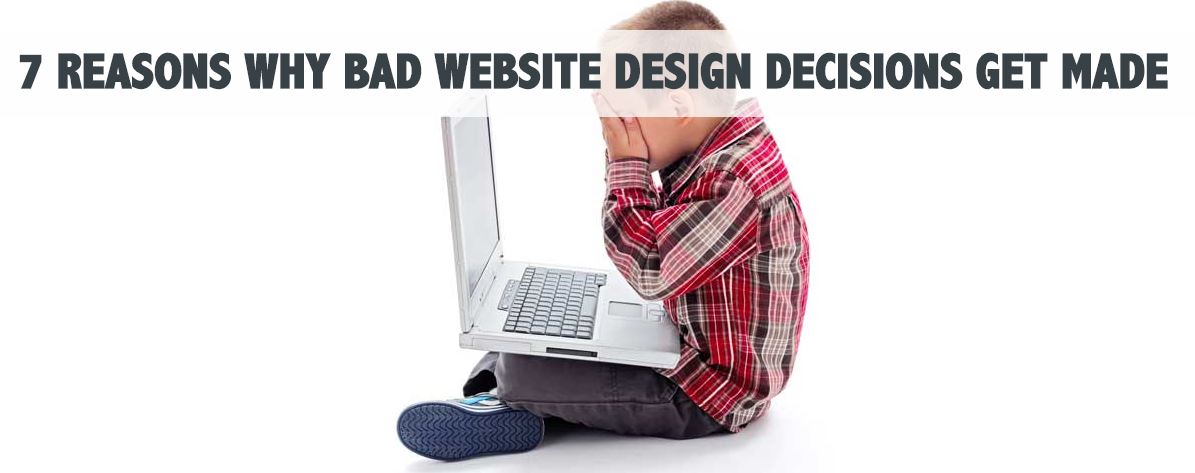
7 reasons why bad website design decisions get made – original post from Tribute Media
All of this information is very easy to get:
Have a look at your current website analytics – there is a wealth of information in here about current user behaviour. Where are your users coming from? What content is most popular? Where are your poorly performing pages?
in addition to this you should be profiling your different website users – creating personas for the people who visit your website is a very useful exercise that will allow you to better understand how to deliver a positive website experience for your visitors.
This can be easily achieved by talking to the customer facing people within your organisation. Your sales team is the obvious first step but don’t ignore the others in your organisation that can add some serious value to this process.
If you discover that you are selling to procurement departments, then involve your own in this profiling exercise as you’ll often find that what is important to them gives you an insight into what motivates your customers’ buying decisions.
The same is true if you find that you are selling to accountants – increasingly it is accountants who occupy the Managing Director or CEO position. Involving your own Finance Director or CFO will allow you to expand your awareness of what questions these people are likely to want answered when considering buying a product like yours.
It is this focus on your visitors that will allow you to create a website that will ultimately deliver you increased conversions – whatever that conversion may be. It could be increased sales, increased white paper or brochure downloads, increased enquiry levels, increased registrations for the event you are running, increased donations for your charitable cause.
Whatever sector you are operating in – public, private or third sector – the process should be the same.
In my experience a lot of the conflict and pain of a new website design project is as a result of a misplaced focus on the subjective elements of the website design.
It is virtually impossible to get a cross section of people to agree on a design that they all like – we all prefer different websites for different reasons. When your project uses consensus on the design of your new site as the starting point or your project it is destined to take longer than you originally planned for, cost more than you originally planned for and – most importantly – deliver a website that it not configured to achieve its objectives for improving business results.
Your website is not a vanity project – it’s a project that when delivered correctly will deliver real, tangible, positive results for your company or organisation. But only if you get back to the science of the process and remove subjective decision making.
7 Reasons Why Bad Website Design Decisions Get Made.
If you would like some help with your website project then get in touch:



 Petrac Marketing