The importance of context in social media advertising

I’m about as passionate about all things marketing as is healthy (and maybe just a little more) – but a recent experience has firmed up the importance of context.

Let me explain.

In trying to determine where is the best place to promote your products or services the conversation must extend beyond just where your customers are. It must also ask ‘why are they there?’

I’ve been subjected to an assault recently when on Facebook by a crowd who call themselves ‘Luv for Marketing’.

Firstly, I’ve (almost) forgiven them for their ‘down with the kids’ name and since they’re appearing on my news feed I’m assuming that even as a 40 year old they do think they have something to offer me.

This is not the problem however.

The problem is that when I’m on Facebook that’s not what I’m there for.

I’m there for lots of other reasons – the vast majority of them recreational. Latest sports news, checking the build up to some upcoming events and – let’s be honest – being nosey.

Luv for Marketing appear on the surface to have got everything right – I’m interested in their subject matter and they’ve crafted concise yet descriptive ads which indicate to me that they’d be worth looking into further.

But the fact is that I’ve seen the ad more than 50 times now and haven’t once clicked the ‘learn more’ button.

Why?

Because in that place (Facebook) at that time (downtime after work) I’ve had my fill of marketing for the day.

If, on the other hand, they’d got at me through LinkedIn while I was updating my company page it’s more than likely that I would have acted on their prompts before now.

While this is just my own personal experience with one particular advertiser I think it raises some interesting questions around context and timing when considering our marketing messages.

Disclaimer:
This post is in no way a negative comment on the services that Luv for Marketing offer or their marketing approach. It is simply my own experience of their Facebook marketing which I hope is working fabulously well for them.

If anyone from Luv for Marketing should read this post – get in touch. I’m interested.

If you’d like some help defining the necessary context for your social media advertising then get in touch.

Go back

Your message has been sent

Warning
Warning
Warning
Warning

Warning.

The 3 C’s of a successful content marketing strategy

We’re all producing new content on a daily basis which we hope will be eagerly consumed by customers. This involves the distribution of this content to our target media – both online and offline so what is it that will get our content selected for publishing?

The Chartered Institute of Marketing in Ireland (CIM) held an event in Malmaison Belfast today which sought to address this very issue and one of the contributors was Gavin Walker. Editor, Business First of the Business First publication. As the gatekeeper who is in ultimate control of whether our content gets the airtime we desire when Gavin (or others holding editorial positions) speaks it’s worth listening.

What I took away from Gavin’s presentation was the 3 c’s to a successful content marketing strategy:

  1. Context
  2. Content
  3. Conversations

Context in content marketing1 – Context

The first point in relation to context refers not to the subject matter of your material but instead focuses on the infrastructure and resources available to the majority of publications that we target.

Gone are the days when editorial teams are staffed with an army of willing copywriters and journalists who will have either the time or the inclination to redraft your content to make it suitable for publication.

Therefore, in order to maximise the opportunity for your content to get published you need to think about how it will be formatted.

The copy that you send to your target media will have a much greater chance of success if it can be lifted and placed with minimal additional editing.

This requires you to make sure that your copy does not make unsubstantiated claims about how good your product, service or company is.

A simple way to overcome this is to first write about yourself in the third person. Construct your copy as if it is being put together by an impartial journalist – this ensures a focus on the facts and the key messages you want to get across and avoids it reading like a paid for advertorial (which won’t get published – unless you’re paying for it).

Another key element of context is an understanding of where the content will be published.

Is it for a magazine or newspaper or is it for an online publication?

It’s increasingly likely that it’s for both as most print publications will have a website as well.

If the content you’re sending is specifically for print or online then specify this within the release.

A technical article or detailed project case study is probably best suited to a print publication where people will most likely give your content some more time.

A release about the event you’re hosting, a new product launch, new appointments may be best suited to the online publication as a result of the immediacy it offers.

Gavin made some very interesting points about the formatting of releases destined for online publication:

Headlines – keep these to 65 characters or less to ensure search engine optimisation and make sure they include relevant keywords

Description – include a meta description of 160 characters or less which is keyword focused and can then be used by the online publication to describe your content.

Images – name your images with relevant keywords and include the caption to accompany the image as separate text within your release.

Links – if you would like your content to link to a specific landing page on your website rather than the home page then include the details within your release.

Social links – include details of the links to all your relevant social media channels so that if (and when) the publication decides to share your new content they are able to include you in the post.

the content in content marketing2 – Content

Now we’ve got the structure sorted it’s time to focus on the content itself.

Gavin observed that too much content is focused on what the MD wants to talk about rather than what our customers will actually find interesting.

With editorial departments being swamped by over sterilised corporate releases a little bit of extra thought and consideration for your copy can greatly improve not only the potential for it to be published but for it to have real impact.

This links nicely with the other contributor to today’s CIM
event, Chris Fielding-Martin, from UK hotel chain Malmaison.

Every piece of content Malmaison Belfast produce has an edge to it. From their new approach to ‘do not disturb’ signs to how they encourage breakfast room service orders to the signage they use to brand construction works at new or existing hotels.

They are able to do this successfully because they understand what their value proposition is, they understand their target audience and they understand the importance of consistency in all their communications.

As Chris pointed out during his presentation, as they’re in the hotel game what goes on behind the bedroom door is very much their business.

Of course we can’t all be as edgy as Malmaison but we can learn from their approach.

Understand what the objective of the content we’re publishing is. What are we trying to achieve? What do we want the customer to do once they have consumed our content?

Does the content we’re producing make it clear what our value proposition is in relation to the product or service that we’re promoting? Does it answer the ‘what’s in it for me?’ question.

Is the content we’re producing consistent? This is fairly easy to achieve if you have one person producing all of your content but if this is not the case you need to take steps to ensure this consistency.

This will require that you have clear brand guidelines which include a ‘tone of voice’ element.

What sort of language will you use – will it be formal or informal?

How do you describe what it is that your company offers?

What words or phrases do you use to describe the value that you are adding for your customers?

While it can all seem a little daunting it is essential that you take all of these steps to maximise the return from all the content development activity that you are involved with.

With the volume of content being produced across so many channels on a daily basis it’s essential that you take the time to carefully consider your content strategy as this will ensure you stand out from the crowd.

conversations in content marketing3 – Conversations

Maximising the success of your content marketing strategy is an ongoing process that continues well beyond the placement of your material in your target publications or on your own blog, website, social channels.

As a marketer I believe that the biggest potential benefit of the rise of social media is the ability for us to speak directly to our customers.

If our content marketing strategy is successful the result will be an increase in the volume of conversations about our product, service or company online. These conversations will happen whether we are involved or not so it is incumbent on all of us to make sure we are aware of all the conversations that are going on.

It’s important to stress here that this doesn’t necessarily mean we should get involved in every conversation – there are some conversations that we should take a step back from if they have the potential to damage our brand. There may also be cases, as highlighted by Chris from Malmaison today where getting involved may just be adding fuel to the fire.

While we should be a aware of these conversations sometimes it’s best to say nothing.

Negative feedback is probably impossible to eradicate so we need to know how to deal with it. This has to be considered on a case by case basis – some issues may be quickly sorted out in public on social media but in other instances it may be best to show an initial response in public but encourage the individual concerned to take the communication offline where it can be dealt with better.

Thanks to the CIM in Ireland for organising another great event today. I found it a very useful session and hope that this post gives those that didn’t attend an opportunity to be benefit from the presentations given by Chris Fielding-Martin of Malmaison and Gavin Walket of Business First.

I’ve included the Twitter handles for the relevant contributors to today’s event below:

Malmaison Hotels on Twitter

Business First Online

Chartered Institute of Marketing (Ireland)

Choosing the right social media tools for your business

social media marketingI was talking to a guy recently who told me that booking a conference room in a hotel and delivering a sales presentation worked really well for his business.

So here’s what I’m going to do.

There’s a really nice conference centre in a hotel near our offices so I’m going to book it for next month. We’re going to put together a killer presentation, build a stage, make a video, lay on some nice food. I’d say 100 people should cover it.

That’s it organised – all systems go.

What’s that you say? What about the audience?

Not a problem – sure that guy told me it worked really well for his business.
I hope you’ll agree that this is a completely ludicrous idea. Ill conceived with no consideration for the requirements of my business.

Yet people are doing this day and daily in marketing departments all over the world.
Maybe not with the conference room booking but instead with their choice of the social media channels that they use.

Like magpies people are drawn to the latest shiny new toy in the pursuit of the coolest way to deliver their marketing messages.

People flock to Twitter, Facebook, Instagram, Pinterest, LinkedIn with no knowledge of whether their customers are using this media.

Across the board there seems to be a universal reason for this behaviour – because they’re free.

They only way they are free from a direct financial cost is if you are working for nothing (which I’m guessing that the vast majority of you are not).

Even if you are working for free then there is the cost in terms of your time to consider. Time that you would surely prefer to be spending on activities that will add some value to what you are doing.

And then there’s the opportunity cost – what new business are you missing out on by wasting time on marketing tools that will deliver no results?

How much more business could you win by stopping focusing on all the shiny new toys and narrowing the focus to tried and tested channels that you know will bring you results.

You wouldn’t deliver a sales presentation in an empty room so don’t use any marketing tools until you know your customers are there.

Stop using delivery channels for your marketing messages based on how new, how cool they are or based on other trendy, cool people and companies that may be using them.

Do your research. Understand your customers. Select the right channels. Clearly define the message you want to communicate and the customer interactions you are seeking.
Only then will you be extracting maximum value from every penny in your marketing budget and making the most efficient and valuable use of your time.

How to Diagnose Your Funnel to Create Predictable Growth

Why wouldn’t you click on a headline that includes the words ‘predictable growth’?

It’s what we’re aiming for every day – a way of optimising the sales funnel so that we are able to confidently predict what our sales numbers will look like in the future.

The article linked below is one of the best I have read on this subject and after reading it you’ll wonder how you didn’t already know this?

Not only does it break the sales funnel down into 3 easily understandable sections – top for traffic, middle for lead conversion and bottom for sales – but it identifies every possible scenario that will help you to identify where the inefficiencies lie within your sales funnel.

Then it only goes and tells you exactly what you should be doing to combat the inefficiencies you have identified.

If you have been baffled by trying to analyse your sales funnel and confused by the thought of how you go about working out where the problem is then I suggest that you read this article. Things will appear a lot more clear afterwards.

How to Diagnose Your Funnel to Create Predictable Growth | Marketing Automations.

Thanks to HubSpot for the original post.

What’s Trending in Marketing: Top Content of the Week

With so much advice available on how you can maximise the return from your marketing investment it’s nice to find a blog post that pulls a lot of articles together. This post on LinkedIn does just that and deals with a number of interesting topics:

  • Case Studies showing how Content Marketing Drives ROI
  • How to improve the tired old content on your website
  • What content marketers can learn from traditional journalism
  • A beginners guide to keyword research for SEO
  • SEO for mobile
  • Getting the biggest SEO bank for your marketing buck
  • Advice on structuring your URL’s for the best SEO advantage
  • 17 Visualisation tools to make your data beautiful
  • What makes a truly great product great?
  • 21 thought leaders answer 17 questions

What’s Trending in Marketing: Top Content of the Week | Marketing Solutions Blog.

Dealing with the Digital Skills Gap

Digital Marketing Strategy Petrac Marketing

Digital marketing is an essential part of the modern marketing mix

With the amount of technology now available and the pace of change it’s never been as challenging for anyone working in marketing to understand all of the channels that are available when trying to get your product or service to market.

This has led to the creation of new Digital Marketing and Social Media Marketing roles  – but I can’t help feeling that this is just an abdication of responsibility by those in charge.

Digital is simply a delivery mechanism for all your marketing efforts. There is no digital marketing – it’s just modern marketing.

In an increasing number of organisations there is a recognition that there is a skills gap in relation to digital marketing. However, it’s the response to this problem that I think is focused in the wrong place.

For too many companies and organisations this skills gap is addressed by the creation of a new role within the marketing team – Digital Marketing Executive, Social Media Marketing Executive being two such positions.

I don’t think anyone would argue that digital marketing represents a huge part of the modern marketing mix – so surely there is a requirement that every member of your marketing team is a digital marketer?

When creating the person specifications for all members of your marketing team surely some sort of digital capability must be included in the ‘essential skills’ box?

You wouldn’t employ a software engineer without the relevant qualifications. You wouldn’t employ a engineer without knowing that they had training in the relevant engineering discipline. You wouldn’t employ an accountant who hadn’t had the appropriate training.

The same should apply with your marketing team. Creating separate digital marketing roles is simply abdicating responsibility for digital to a single person in order to avoid having to learn about it yourself.

Digital marketing is no longer a ‘nice to have’ for anyone working in marketing. It’s essential that you have these skills or you will end up being surplus to requirements.

The other side of the same coin is that by skilling yourself up in all things digital you are giving yourself a serious competitive advantage over a lot of other people.

There’s simply no excuse any more – there are shed loads of formal digital qualifications out there and as much online content as you can cope with.

As with anything though the only way to really get it and understand how you can use it to improve your business results is to get involved.

So stop passing the responsibility on to others and embrace the challenge and the opportunity that digital marketing presents.

Get started now – Professional Diploma in Digital Marketing from the Digital Marketing Institute (Ireland and UK)

If you would like some help working out how you can take advantage of digital within your marketing strategy then get in touch.

Go back

Your message has been sent

Warning
Warning
Warning
Warning

Warning.

Viral isn’t a valuable endgame

It seems that everyone is searching for the silver bullet that will allow them to create viral campaigns at will. I think this is a problem.

The endless focus on viral and how it can be achieved suggests to me that there is a misconception that a viral campaign is the single key performance indicator that matters. The suggestion here is that viral automatically equals success. While there is no doubt that this is the case in some instances I think there are more than enough examples of viral campaigns that simply haven’t worked – they haven’t delivered any significant business result.

I’ll illustrate this by looking at examples of 2 viral campaigns – both of which would have been described as successful if the only measure was whether they achieved the ‘viral’ badge of honour.

One of the best examples of a successful viral campaign is the ongoing campaign run by Blendtec to promote the blenders that they produce. This is one of the most often quoted examples of successful viral campaigns and it’s easy to see why. They didn’t just create one video that went viral – they’ve managed to sustain their success over a reasonably long period of time (digital years, as we all know are like dog years in fast forward).

Their video showing the blending of an iPad using a Blendtec blender has to date had almost 17 ½ million views on their Youtube channel. The iPhone in the blender has had 12 ¼ million views. Other products that have had the Blendtec treatment include golf balls, crowbars, magnets and marbles.

You can watch all of the Blendtec videos on their Youtube channel – https://www.youtube.com/user/Blendtec

So why did it work?

The Blendtec story has so many factors that made it successful – the first video that went viral was simply the delivery mechanism for the campaign.

First of all, they have a great product – the rationale for putting all this weird and wonderful stuff through a blender was to demonstrate the strength of the blender. If it can blend an iPad or a golf ball it’s going to have no problem making your breakfast smoothie. So the campaign had a clear purpose – demonstrate one of the key unique selling points of the product.

Secondly, it’s a mass market product. Achieving almost 30 million views for the iPad and iPhone videos is a step in the right direction for Blendtec in making their product more well known and more desirable. The potential for people to decide to buy a Blendtec blender is almost beyond comprehension – it’s not inconceivable that every home in the world could have a Blendtec blender.

The key thing that determines whether the Blendtec campaign was a success is the difference it made to their sales numbers. The results here are astounding – in 2009 it was reported that after the first 186 videos sales were up 700%.

All of this was possible because the campaign had a clear purpose and a solid business behind it.

You can read a case study of the Blendtec story at http://www.socialens.com/wp-content/uploads/2009/04/20090127_case_blendtec11.pdf

This is a viral campaign that worked – not because it went viral but because it delivered a significant business result.

Equally, there are mass market brands that try and run viral campaigns that aren’t as successful. One of the best to illustrate the point that viral alone doesn’t mean success was done by Kodak back in 2007.

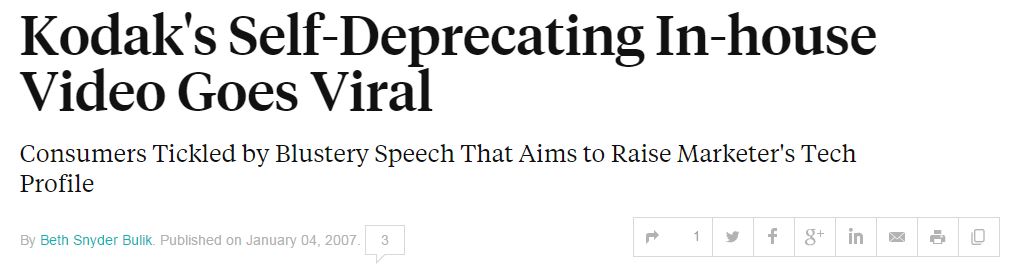
In the absence of the video you can read an online article detailing the success of the campaign at http://adage.com/article/digital/kodak-s-deprecating-house-video-viral/114076/

Kodak viral video

Headline from a Adage article on the famous Kodak viral campaign

This video sought to address the perception that Kodak was a tired old brand that had been left behind by the digital photography boom. They had failed to spot the changing demands of their customers and they tackled this issue head on with the launch of a video which was very self deprecating – admitting all the mistakes of the past and recent present but promising that it was all about to change.

Personally, this was one of the best videos that I ever watched online – but despite numerous searches it’s just not available any more. Why? Because in 2009 the company went out of business.

While the campaign achieved the objective of going viral it didn’t make one blind bit of difference to the prospects for the company. Why? Because viral isn’t a healthy objective to have for any campaign.

The Kodak campaign was destined to fail because it had no purpose other than going viral, no substance to back up the claims they made in their video. They may have talked about embracing the digital revolution and to watch out for all the new technology that they were about to unleash on the market. But the fact was that they didn’t have any of this. It was an elaborate cover story to try and buy some time.

I bet when the Kodak video went viral the agency involved and the Kodak marketing team were busy patting themselves on the back about what a wonderful job they had just done. For them, the viral video was evidence of success. The proof that this has no foundation is what happened to Kodak in 2009 when they closed their doors.

I think these two campaigns represent the 2 extremes of viral campaigns.

Blendtec is a great sales, marketing and product development story that demonstrates the value in understanding your customers, understanding your product and having a clear objective for your campaigns.

Kodak is an example of viral for the sake of viral. That’s as much substance as there was. Was it clever? Yes. Was it funny? Yes. Did it reach a massive audience? Yes. Did it work? No.

What this says for me in that in the midst of this technological age success in sales, marketing and business in general is still down to a few good old fashioned things:

A great product, in the right market, at the right price, delivered through the best sales channel with superior customer support and  a great sales team.

Get these basics right and your success will be long term and tangible rather than a flash in the pan viral campaign.

I’m reminded here of a previous post on this blog, the title of which seems very relevant. Consistency is far better than rare moments of greatness.


Create your own images for free

There are numerous online image creation tools available but the one I’m using most the minute is Canva.

There are so many templates available for you to use so whether you’re looking for a simple facebook or twitter header profile, business cards, posters or infographics they have made it so easy to use.

canva design templates

Just some of the free image templates available on Canva

The process is really simple – you select from a range of design templates and then customise it with your own text and images. As a starter the free templates offer more than enough scope for you to explore the capability of the system.

There is of course a library of premium themes which you can access – I haven’t found any need to use these yet but they do offer expanded libraries of design templates and more flexibility when it comes to layouts.

As well as all the social media images you can create I also use the tool to help create images for sales presentations to existing and potential clients. The image sizes are designed to fit with Powerpoint / Keynote and are really quick and easy to create.

Presentation powerpoint image Canva

Presentation image created using Canva

For beginners on the system there is a Canva Design School  which contains a library of tutorials on how to use the system.

Canva design school create images for free

The Canva design school tutorials

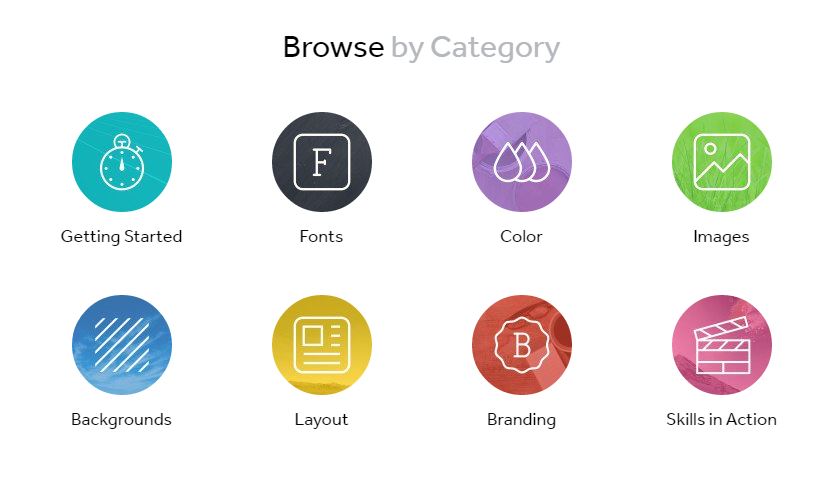
You can also browse the design school by category to find help with the specific project that you’re working on.

Canva Design school categories

Browse by category on the Canva Design School

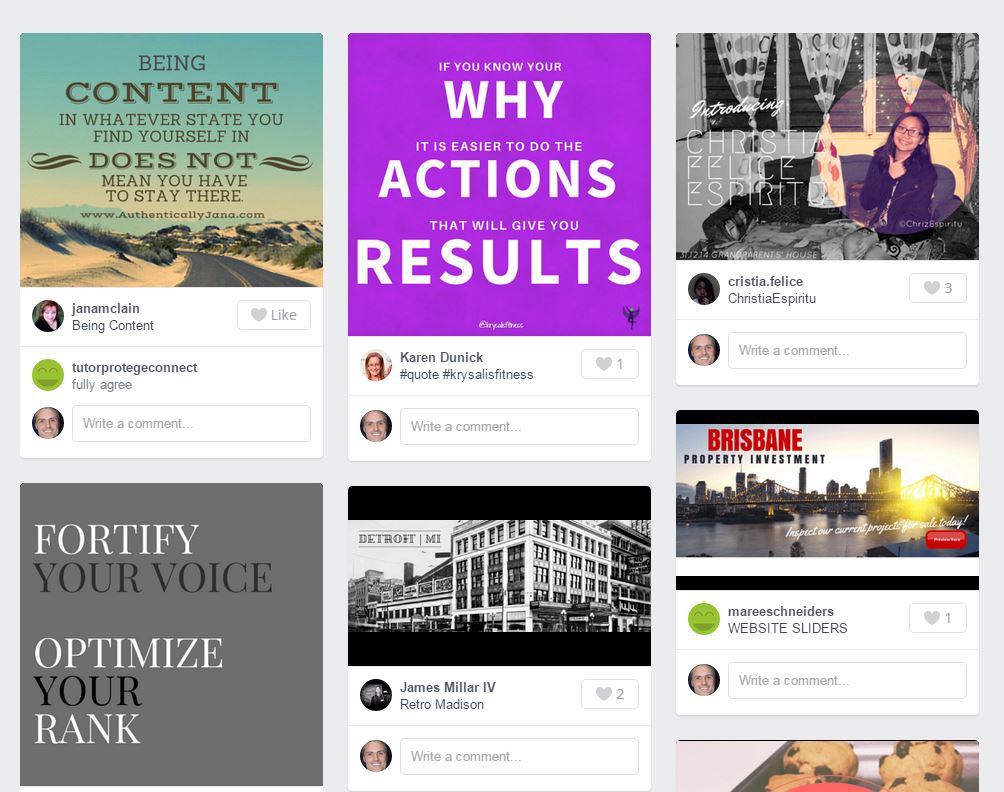
Once you’ve created your free images you can either keep them private or share them to show others the designs you have created. Even if you want to keep your own images private you can search the Canva Stream to see the most recently published images. This is a great resource for finding out how you could use the system for yourself.

Canva design stream create your own free images

Canva design stream shows the most recently created images

If you’d like any help discovering how you can use Canva to benefit your business then get in touch:

Go back

Your message has been sent

Warning
Warning
Warning
Warning

Warning.


Pinterest ‘failing to add value for brands’

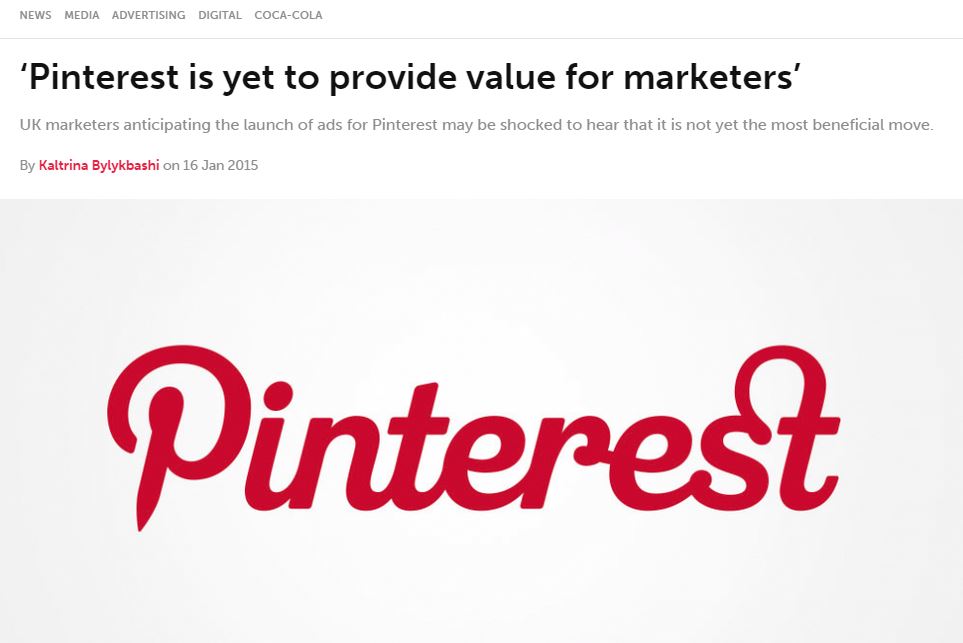
pinterest fails to add value for brands

Pinterest ‘failing to add value for brands’ according to a report from Forrester

I came across an interesting post on the Marketing Week website(UK) recently in relation to the ‘Promoted Pins’ feature on social networking site, Pinterest. The article revealed that a report from Forrester indicated that the majority of brands that are using the Pinterest ad platform are struggling to get any value from it.

The Promoted Pins feature is soon to arrive in the UK market and I am sure that agencies up and down the country will be rushing to spend their client’s hard earned cash on this shiny new platform.

The article is – in my humble opinion – an indication of a wider problem with the choice of the best social networks to use for advertising. Rather than take the report from Forrester as an indication that Pinterest is of no value to advertisers I think that the problem actually lies with the advertisers themselves putting the technology first rather than their own individual business requirements.

This is not a phenomenon that is exclusive to Pinterest – I think every social media platform is having millions of pounds / dollars / euros wasted on it every day. It’s not because there is no value to be gained from advertising on these platforms – but because the wrong people are advertising.

As soon as the latest trendy social media platform becomes open for advertisers it seems that companies are flocking to their doors to spend their hard earned cash. The problem is that these decisions to advertise on Pinterest and other platforms seem to be based on the fact that Pinterest is the latest hot social media property rather than any meaningful research that suggests Pinterest will represent a good return on investment.

By asking a few simple questions before jumping on the latest social media platform you can eliminate this problem and make sure that you get the best bang for your buck:

  1. Understand the demographics of the users of the social media network – what is the user profile and what are they looking for when they are there?
  2. Understand whether this demographic matches your target audience – all you’ve done at this stage is identify a potential advertising platform. There is still work to do before you can make an informed decision.
  3. Understand why your customers are using the social media network – if you’re selling in a B2B environment be careful. Just because your customers may use the network doesn’t mean that they are in buying mode when they are there. It may be a social thing where they keep in touch with friends and they may not be open to be sold to.
  4. Do your research – find out some case studies for how other people are successfully using the social media network and use this to inform your decisions about how you can design a campaign that will make you money.

Once you’ve done all of this you can be much more comfortable with your decision to advertise. There is no doubt that this process will mean that on some occasions your decision will be not to advertise on the latest trendy offering that social media world has to offer. And that’s OK. Especially when you’re reporting on the return that your advertising revenue is generating.

Read the full Pinterest article on the Marketing Week website – Pinterest failing to add value for brands

(You’ll need to register – which is free – in order to read the article).

If you would like some help building your social media or content marketing strategy then get in touch:

Go back

Your message has been sent

Warning
Warning
Warning
Warning

Warning.

Five Free Infographic Templates

If you’ve been waiting to get started using infographics then here is your chance.

Those lovely people over at Hubspot have created some great infographic templates in powerpoint that will allow to quickly and easily create your very own powerful infographics.

So get over to the link below and get creating.

Five Free Infographic Templates.

Of course, make sure you have the cart firmly behind the horse – what do you intend to use the infographics to promote?

It could be the advantages of your product over the competition?

It could be some interesting data you’ve come across that will be of interest to your customers (and make them realise that they need your products or services).

It could be a nice way of highlighting the key elements of your project case study in order to drive people to read the full text.

There are a huge number of ways that you could be using infographics – if you’d like some help figuring this out then get in touch.

Go back

Your message has been sent

Warning
Warning
Warning
Warning

Warning.