Make today your new day

I was recently invited by the team at Digital DNA to contribute a guest blog in advance of the upcoming conference in Belfast on 8th June 2016.

The focus for my article was the opportunity for us as marketers to seize the new opportunity that exists for us to not only be content producers but also to be the distribution channel in this new digital world.

You can read the full post on the DigitalDNA website.

You can read my thoughts on the DigitalDNA conference here – penned after a previous visit.


The 3 C’s of a successful content marketing strategy

We’re all producing new content on a daily basis which we hope will be eagerly consumed by customers. This involves the distribution of this content to our target media – both online and offline so what is it that will get our content selected for publishing?

The Chartered Institute of Marketing in Ireland (CIM) held an event in Malmaison Belfast today which sought to address this very issue and one of the contributors was Gavin Walker. Editor, Business First of the Business First publication. As the gatekeeper who is in ultimate control of whether our content gets the airtime we desire when Gavin (or others holding editorial positions) speaks it’s worth listening.

What I took away from Gavin’s presentation was the 3 c’s to a successful content marketing strategy:

  1. Context
  2. Content
  3. Conversations

Context in content marketing1 – Context

The first point in relation to context refers not to the subject matter of your material but instead focuses on the infrastructure and resources available to the majority of publications that we target.

Gone are the days when editorial teams are staffed with an army of willing copywriters and journalists who will have either the time or the inclination to redraft your content to make it suitable for publication.

Therefore, in order to maximise the opportunity for your content to get published you need to think about how it will be formatted.

The copy that you send to your target media will have a much greater chance of success if it can be lifted and placed with minimal additional editing.

This requires you to make sure that your copy does not make unsubstantiated claims about how good your product, service or company is.

A simple way to overcome this is to first write about yourself in the third person. Construct your copy as if it is being put together by an impartial journalist – this ensures a focus on the facts and the key messages you want to get across and avoids it reading like a paid for advertorial (which won’t get published – unless you’re paying for it).

Another key element of context is an understanding of where the content will be published.

Is it for a magazine or newspaper or is it for an online publication?

It’s increasingly likely that it’s for both as most print publications will have a website as well.

If the content you’re sending is specifically for print or online then specify this within the release.

A technical article or detailed project case study is probably best suited to a print publication where people will most likely give your content some more time.

A release about the event you’re hosting, a new product launch, new appointments may be best suited to the online publication as a result of the immediacy it offers.

Gavin made some very interesting points about the formatting of releases destined for online publication:

Headlines – keep these to 65 characters or less to ensure search engine optimisation and make sure they include relevant keywords

Description – include a meta description of 160 characters or less which is keyword focused and can then be used by the online publication to describe your content.

Images – name your images with relevant keywords and include the caption to accompany the image as separate text within your release.

Links – if you would like your content to link to a specific landing page on your website rather than the home page then include the details within your release.

Social links – include details of the links to all your relevant social media channels so that if (and when) the publication decides to share your new content they are able to include you in the post.

the content in content marketing2 – Content

Now we’ve got the structure sorted it’s time to focus on the content itself.

Gavin observed that too much content is focused on what the MD wants to talk about rather than what our customers will actually find interesting.

With editorial departments being swamped by over sterilised corporate releases a little bit of extra thought and consideration for your copy can greatly improve not only the potential for it to be published but for it to have real impact.

This links nicely with the other contributor to today’s CIM
event, Chris Fielding-Martin, from UK hotel chain Malmaison.

Every piece of content Malmaison Belfast produce has an edge to it. From their new approach to ‘do not disturb’ signs to how they encourage breakfast room service orders to the signage they use to brand construction works at new or existing hotels.

They are able to do this successfully because they understand what their value proposition is, they understand their target audience and they understand the importance of consistency in all their communications.

As Chris pointed out during his presentation, as they’re in the hotel game what goes on behind the bedroom door is very much their business.

Of course we can’t all be as edgy as Malmaison but we can learn from their approach.

Understand what the objective of the content we’re publishing is. What are we trying to achieve? What do we want the customer to do once they have consumed our content?

Does the content we’re producing make it clear what our value proposition is in relation to the product or service that we’re promoting? Does it answer the ‘what’s in it for me?’ question.

Is the content we’re producing consistent? This is fairly easy to achieve if you have one person producing all of your content but if this is not the case you need to take steps to ensure this consistency.

This will require that you have clear brand guidelines which include a ‘tone of voice’ element.

What sort of language will you use – will it be formal or informal?

How do you describe what it is that your company offers?

What words or phrases do you use to describe the value that you are adding for your customers?

While it can all seem a little daunting it is essential that you take all of these steps to maximise the return from all the content development activity that you are involved with.

With the volume of content being produced across so many channels on a daily basis it’s essential that you take the time to carefully consider your content strategy as this will ensure you stand out from the crowd.

conversations in content marketing3 – Conversations

Maximising the success of your content marketing strategy is an ongoing process that continues well beyond the placement of your material in your target publications or on your own blog, website, social channels.

As a marketer I believe that the biggest potential benefit of the rise of social media is the ability for us to speak directly to our customers.

If our content marketing strategy is successful the result will be an increase in the volume of conversations about our product, service or company online. These conversations will happen whether we are involved or not so it is incumbent on all of us to make sure we are aware of all the conversations that are going on.

It’s important to stress here that this doesn’t necessarily mean we should get involved in every conversation – there are some conversations that we should take a step back from if they have the potential to damage our brand. There may also be cases, as highlighted by Chris from Malmaison today where getting involved may just be adding fuel to the fire.

While we should be a aware of these conversations sometimes it’s best to say nothing.

Negative feedback is probably impossible to eradicate so we need to know how to deal with it. This has to be considered on a case by case basis – some issues may be quickly sorted out in public on social media but in other instances it may be best to show an initial response in public but encourage the individual concerned to take the communication offline where it can be dealt with better.

Thanks to the CIM in Ireland for organising another great event today. I found it a very useful session and hope that this post gives those that didn’t attend an opportunity to be benefit from the presentations given by Chris Fielding-Martin of Malmaison and Gavin Walket of Business First.

I’ve included the Twitter handles for the relevant contributors to today’s event below:

Malmaison Hotels on Twitter

Business First Online

Chartered Institute of Marketing (Ireland)

10 tips to help make the most of your awards

Make the most of your awardsAwards are great. There are so many ways that they can have a positive effect on your business. They will help you raise your profile and build your brand reputation.

They will reinforce to your people that they have backed the right horse and will improve staff retention. They’ll attract new potential funders and investors for your business. But now more than ever the sheer volume of awards makes your selection process even more critical.

So how do you ensure that you capitalise on the marketing opportunity that awards present without wasting time completing applications that are of no benefit to you or your organisation?

Here are a few tips on how to filter your list of potential award entries down to a manageable number.

1 – Understand your objective

The first stage is understanding what you are trying to achieve. Different awards will offer different benefits for your organisation. If your objective is local recruitment then your local Chamber of Commerce Awards are worth a look.

If you’re trying to build awareness of your company in a new market then look at awards being organised by a relevant brand. An example is the Deloitte Best Managed Companies Awards. These are run in several countries and with Deloitte being a recognised International brand being able to associate your name with theirs can give you leg up in new markets.

If you’re trying to attract funding or investment in your company then look for awards being run by local financial institutions. Success here will lead to other funders taking an interest in your business – and can also be a useful way to keep your bank manager on his toes by attracting new offers of business banking and export finance.

Your decision to enter any awards should not be based on a knee jerk reaction to the latest notification you have received. It should relate back to your overall business strategy. It’s only then will you enjoy the full benefit that awards can bring. Of course it’s nice to be asked to enter any awards but learning to say no to the wrong awards is the first part of being successful.

2 – Look at previous winners

Once you’ve identified some potential awards it’s now time to look at them in a bit more detail. Previous winners of the awards are generally published on the awards website so this will give you an idea of the kind of companies that have enjoyed success.

You can then benchmark yourself against the previous winners – have you got a stronger story than them? This process will also help you to identify what award categories are going to be best suited to your business – and ensure you avoid wasting time on an entry that has little or no chance of being successful.

3 – Know the organiser’s objectives

Every awards has an agenda so you need to understand what that agenda is and whether that will act as a help or a hindrance to your efforts. To be frank not all awards are created equal. I’m of the opinion that the more detailed the application process the better. This is evidence of an awards where winners are judged on business performance and merit rather than on who paid the best PR agency to put the application together.

4 – Examine the judging criteria

Almost every awards application form that I have ever across will include details of what the judges are looking for. Spend time looking at the criteria and detailing everything you do that meets the requirements. If you have selected a number of different award categories this will help you identify where you are able to put the strongest application together.

5 – Get contributions from across the organisation

While you will undoubtedly have a good idea of the subjects to be covered in your awards application you won’t have thought of everything. Ask for input from other people to ensure that you’ve covered all the bases. This doesn’t need to take a long time – a 1/2 hour workshop with a flip chart, markers and copies of the judging criteria will typically produce lots of new ideas about what you can highlight in your award entries.

6 – Talk to recent recruits

The people who have recently joined your company are a hugely valuable resource when putting together your award entries. They’re only very recently looking at everything from within and can therefore still give a useful external perspective on what impressed them either during the recruitment process or since they have joined the company.

7 – Give yourself time to write the entries yourself

If you’re in it to win it then the panicked writing of entries as you hurtle towards the submission deadline is not to be recommended. This simply leads to compromised entries where the priority has switched from putting the best possible entry together to simply meeting the deadline.

All the planning you have done in selecting the awards best suited to your company objectives will give you time to plan your submission writing effectively. I suggest that the entry you submit should be at least version 3 – and far too many entries are the first draft.

8 – Get the formatting right

Put yourself in the judges shoes – how would you deal with receiving 20+ award entry documents and a requirement to shortlist them to the top 3? It’s more than likely that your entry will be scanned for the relevant information and quick assessment made of the quality.

Make your entry easy to digest – make sure all your key points are highlighted in as concise a way as you possibly can. It’s also worth thinking about the strengths of the points you are making – some will undoubtedly be stronger than others. You can deal with this by starting strong and finishing strong for maximum impact while sandwiching the less strong points between them.

Having said that, if you think any part of your entry is weak then the judges will probably agree with you so be ruthless about what makes the final cut.

9 – Promote yourself

Once you’ve submitted your entry you need to make yourself known to the organisers. Show an interest in the timeframes for shortlists to be announced and the arrangements for the actual awards event.

Every awards you enter has a commercial element to it so any indication that you’re keen to exploit the opportunity presented by the awards will have an impact on the organisers.

10 – Give a bit back Echoing the previous point, the awards organisers have costs to recover and financial targets to hit for the awards night. An early indication of a willingness to take a table at the awards won’t do you any harm and may improve your chances.

A demonstration for enthusiasm about the awards on all the relevant social media channels will help the organisers build the reputation of the awards. This will also be greatly appreciated by the awards organisers as they seek to promote the awards to as wide an audience as possible.

It’s also worth asking in advance about the availability of special awards logos for shortlisted companies and the winners. This indicates to the organisers that you won’t simply put the award on the shelf but will make the most of the PR opportunity presented by your involvement in the awards.

Grasp the marketing opportunity at every stage

Don’t wait until after the winners are announced to decide to release some PR on the event – because if you don’t win you haven’t got a story. If you’re shortlisted for any award there is a definite PR opportunity for you. If you’re lucky (good?) enough to win you’ll then get 2 PR opportunities from the same award.

There’s another marketing opportunity in the writing of your award entry – you’ll undoubtedly learn about things that your organisation does really well that you didn’t previously know about. Don’t leave this information in the award entry. Make sure you introduce it to your marketing materials – your website, brochures, proposals, videos.

To wrap up…

There are a lot of awards out there and it can be difficult to filter out all the noise and narrow your focus. It is however an exercise worth doing. Winning the right awards can deliver a wide range of benefits so good luck with your submissions. And if you need any help with any part of the process then you know where I am.

What’s Trending in Marketing: Top Content of the Week

With so much advice available on how you can maximise the return from your marketing investment it’s nice to find a blog post that pulls a lot of articles together. This post on LinkedIn does just that and deals with a number of interesting topics:

  • Case Studies showing how Content Marketing Drives ROI
  • How to improve the tired old content on your website
  • What content marketers can learn from traditional journalism
  • A beginners guide to keyword research for SEO
  • SEO for mobile
  • Getting the biggest SEO bank for your marketing buck
  • Advice on structuring your URL’s for the best SEO advantage
  • 17 Visualisation tools to make your data beautiful
  • What makes a truly great product great?
  • 21 thought leaders answer 17 questions

What’s Trending in Marketing: Top Content of the Week | Marketing Solutions Blog.

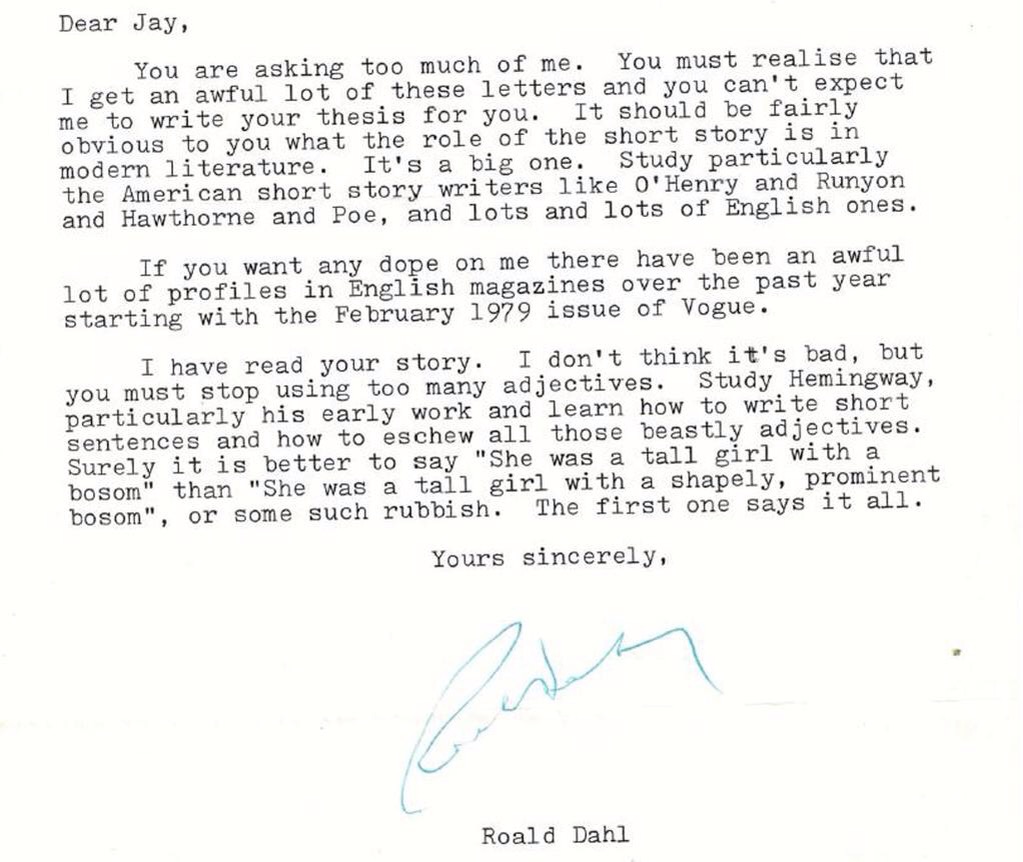
Some great advice from none other than Roald Dahl

I came across this little gem on Twitter recently. Jay Williams wrote to Roald Dahl in 1980 asking for some advice on a short story he had written. The response from Roald Dahl is blunt – but gives some great advice on how to write better stories.

IMG_4866

Why you should outsource your PR

peter craven blog petrac marketing

PR is an essential part of your marketing mix

PR has never been as important – Google has turned everyone into a researcher. Booking a holiday used to involve a 20 minute conversation with a travel agent. Not any more. People are now prepared to invest days of their own time building their own summer holiday through cheap airline sites in combination with Tripadvisor and other similar sites.

Whatever industry you’re in, whatever you’re selling, you can guarantee that at some point during the buying cycle your customer will spend a significant amount of time researching both on and offline. A well developed and executed PR strategy will help you maximise the opportunity that this offers.

Developing and executing a successful PR strategy requires substantial time and effort. Time and effort that I know from experience that marketing departments just don’t have enough of. Putting the content plan together at the start of the year is the easy bit – but how many of your releases either don’t get written at all or get cobbled together in a panic as a result of a last minute notice of an editorial deadline?

There are many reasons why outsourcing your PR makes sense and I have outlined some of these below:

1 – Maximise your return on investment

It will allow you to maximise the potential that the medium offers for getting your message out there by receiving free coverage in your target publications. Any investment you make in PR must take into account the equivalent cost of buying this space in trade magazines. The fact that an external PR partner will be focusing on this and this alone ensures a far better return on your investment than if you try and manage the process yourself.

2 – Creating targeted content with an increased potential for placement

Relationship building with editors and journalists is key to success – and once again I know from experience that while this is a great idea, most marketing departments just don’t have the time to do this properly. The result is a lot of guesswork about what material you should send to your target publications. By outsourcing your PR you can remove this guesswork from the equation – we understand what different editors are looking for in a story, what the editorial priorities are for specific magazines, what issues they struggle to gather regular content for. We can then use these insights to inform your editorial plan – maximising the potential for free coverage in your target publications.

3 – Better, deeper, more insightful content

We can get insights from within your organisation that you may struggle to uncover. Once we’ve identified the thought leaders within your organisation we can spend time with them to gather their thoughts on the relevant industry topics that are going to get us the most coverage. I know – from experience – that when you try and do this internally the regular meeting just gets pushed further and further back until you eventually just delete it from your outlook calendar. Not only is the meeting much more likely to happen when it’s being facilitated externally but with proper preparation and structure we can get much more valuable information from the meeting. Information which will provide content for several new items for your editorial calendar.

4 – Content Marketing in action

It’s your content marketing strategy in action. Producing all the content that your content marketing strategy requires is something that I bet you and your team just don’t have time to do. So leave it to us. We can work closely with you to make sure that it delivers all that you require in terms of coverage, increased web traffic, increased enquiry levels, increased downloads – whatever your specific goals are.

5 – Quality & quantity: the best of both worlds

The only way to be a really good writer is to write a lot – we do. Everyday. It’s not rocket science. The more you practice something the better you get at it. When you’re working within a marketing team you have so much going on that you just don’t have the time to write as much as we do. By outsourcing your PR you are investing in the quality of your press releases, news stories, white papers, case studies. This will lead to more coverage for your material – in an environment where layers of editorial oversight have been stripped away from the vast majority of publications they are crying out for copy that is sent to them ready for publication. By employing a professional copywriter to produce your content you will get better results from your PR activity.

If project case studies are important for you then we can help you make these have maximum impact. The key to good project case studies is understanding the key reasons why your customer bought from you in the first place and what benefits they have enjoyed since.

This is where it goes wrong for most companies producing their own material. All too often the case study turns into a description of the features and benefits of what you sell rather than a true project case study. We can get in front of your customers – because we have the time to do so. This results in is getting the insights necessary to allow us to produce a case study that your potential customers can relate to. And who knows – it may just uncover some additional sales opportunities with your existing customer that you just weren’t aware of.

It’s about your return on investment:

There’s a recurring theme here – the reason you should outsource your
PR is quite simply to get a better return on your investment.

If you would like some help developing your PR strategy or content plan and then executing a campaign that delivers for your business then get in touch:

Go back

Your message has been sent

Warning
Warning
Warning
Warning

Warning.

Build Your Content Calendar: 3 Easy Steps

As we enter a New Year I’m sure you’re all thinking about your content marketing calendar for 2015.

There is a great article on the Content Marketing Institute website from October 2013 that offers some great advice. (The article was originally published by Shanna Mallon).

The success of the article for me lies in how simple the process actually is. There are only 3 things that you need to do in order to get you started:

Understand your sales cycle – if there are seasonal variations in your business then set your distribution plan accordingly. Understand when your customers are likely to be looking for your products and make sure you have set a plan in place to distribute relevant information at the right time.

Brainstorm topics and align them to categories – what are the questions that your customers want answered? what problems are your customers having that they would like help solving? what content can you offer that proves that you will be the right choice to do this?

Set your content calendar – Now it’s just about putting the plan in place for what content you produce and when you produce it. The plan should also take account of how your customers like to consume information – technical articles, project case studies, videos, white papers, videos etc. A good content marketing plan will include a mix of all of these (and more) which is tailored to the specific requirements of your customers.

It’s that simple. So stop putting it off and just get started.

You can read the original article from Shanna Mallon at the link below:

Build Your Content Calendar: 3 Easy Steps.

If you would like some help building your content marketing plan or producing your targeted content then get in touch:

Go back

Your message has been sent

Warning
Warning
Warning
Warning

Warning.

Five Free Infographic Templates

If you’ve been waiting to get started using infographics then here is your chance.

Those lovely people over at Hubspot have created some great infographic templates in powerpoint that will allow to quickly and easily create your very own powerful infographics.

So get over to the link below and get creating.

Five Free Infographic Templates.

Of course, make sure you have the cart firmly behind the horse – what do you intend to use the infographics to promote?

It could be the advantages of your product over the competition?

It could be some interesting data you’ve come across that will be of interest to your customers (and make them realise that they need your products or services).

It could be a nice way of highlighting the key elements of your project case study in order to drive people to read the full text.

There are a huge number of ways that you could be using infographics – if you’d like some help figuring this out then get in touch.

Go back

Your message has been sent

Warning
Warning
Warning
Warning

Warning.

Consistency is far better than rare moments of greatness

Chess board represents marketing strategy

Random moves lead to defeat – strategy is what is required to win

I love this line – the title of a book by Scott Ginsberg from 2012.

For me it sums up what marketing is all about. While others may judge us on the impact of an individual event, video etc we should be judged on consistently delivering results that will allow our businesses to achieve their goals.

It is far too often the case that marketing is judged on the tactics employed rather than the overall results – and this is because of a disconnect between the overall business strategy and the marketing activities that we are engaged in.

Rare moments of greatness happen by accident rather than design. They happen because we’re just trying to do a lot of different stuff with the digital channels available to us without proper consideration for what we’re trying to achieve or what success looks like. It’s inevitable that the more we do of this stuff, the more we learn about what works and the better we get at spotting content that is likely to get a good reaction online.

And this is part of the problem – an endless pursuit of Facebook likes does not constitute a strategy. It is merely a tactic to help you deliver something valuable. So what is it that you’re trying to deliver? The problem is that a lot of people just don’t know.

To move from rare moments of greatness to the consistency that will deliver real business value you need to take a step back – ignore all the tools you have available to you and focus on what it is you are trying to achieve.

The first step is to understand what your goals are – this is derived from your overall business strategy. This could be to win a certain amount of new sales / donations within a new sector or market or increase market share to give some examples.

From this we are then able to define what the goals of our marketing efforts are:

Are we trying to drive traffic to our website or blog because we know this generates more leads?

Are we trying to provide resources and information to assist our customers with their buying decision?

Are we trying to build a social following to build our reputation in the industry?

Once you know what it is that you’re trying to achieve you then need to know how you’re going to measure success.

If we’re trying to drive traffic to the website to generate more leads – how much traffic do we need and how many leads should this convert to?

If we’re trying to provide resources and information to assist customers with their buying decision – how many downloads of the whitepapers, brochures and case studies are we looking for?

If we’re trying to build a social following – how many new likes or followers are we trying to win? Or maybe focus on the engagement metrics instead – the conversations that begin because we started them, the number of times our content was shared?

When you have these things in place you can then start thinking about the tactics that you’re going to employ to help you achieve your goals. It’s only now that the channels come into the equation – where do your target audience hang out, what is the best way to connect with them when they are there and what content will they find either useful or interesting? This should include both online and offline channels to deliver the best results.

A well considered digital strategy will yield results for your business – simply because you now know what you are trying to achieve.

This will allow you to quickly and easily report on progress internally and demonstrate to the cynics in your organisation the value you are adding through your digital content marketing activity. This focus on performance is what is all too often missing from the marketing function.

Too many KPI documents for the marketing department are littered full of tactics that shift and change depending on the latest requests from the board or the sales team. All this does is measure activity – and just because you’re busy doesn’t mean you’re adding any value.

By stepping back and considering what it is that we are trying to deliver we can shift the focus from the activity to the value that we are adding and this is when we will achieve consistency.

Because consistency is far better than rare moments of greatness.

If you would like some help either developing your digital marketing strategy or deploying the tactics to ensure success then get in touch.

Go back

Your message has been sent

Warning
Warning
Warning
Warning

Warning.

Content Marketing – still to be convinced? Read this.

content marketing as a magnet for new customers

Use content marketing as a magnet for new customers

There are some compelling stats out there supporting the rise of content marketing over the last few years – the number of web searches for ‘content marketing’ has increased by 400% since 2010 (stats from Google Trends) and there are now 27 million pieces of content shared online every day (according to AOL).

These 2 stats are taken from a great blog post by @captora last week called ‘20 tweetable content marketing stats that every marketer should know’.

I published a post last week in response to this attempting to delve a little deeper. While the figures are undoubtedly useful for reinforcing the importance of content marketing to any modern marketing strategy I feel that there is a need to look at what questions they provoke.

The 2 most important questions for me are:

  1. What does this mean for your company?
  2. What can you do about it?

My previous post dealt with the 2 stats mentioned earlier about the 400% increase in searches for ‘content marketing’ and the 27 million pieces of content shared online every day. You can read my thoughts on this by visiting the post – Need convinced about content marketing? Read this.

For today, I’d like to focus on another stat from the @captora post and answer the 2 questions posed above:

Stat #1
78% of consumers think organisations that create content are interested in building relationships.

What does this mean for your company?

This one stat alone sums up one of the major opportunities that exists with content marketing. For decades marketing departments were engaged in the game of producing content and hoping that the relationships you had developed with your target print publications would mean that your news release, project case study or company announcement would get featured.

In most cases the only way to really ensure this happened was to part with some of your hard earned budget and invest in advertising.

Of course the best print publications maintain a level of editorial integrity (and that is how they have survived) but content marketing represents a huge shift in the balance of power. We’re all publishers now and the technologies that facilitate the content marketing revolution have added a level of democracy to our communications that didn’t previously exist.

For the first time it’s genuinely not about how much advertising spend you want to commit to a specific publication in order to ensure the required level of editorial coverage.

You produce your own content and publish it. If it’s good enough it will gain traction online with your customers, increase your profile and ultimately help you achieve your goals whatever they may be.

Another benefit of this development is that your brand can have a voice and the opportunity to communicate directly with your target audience rather than being run through the editorial controls of your target print publications.

This helps to better portray the personality of your organisation which allows your potential customers to establish whether it is an organisation that they would like to do business with.

What can you do about it?

In order to maximise the chances of success from your content marketing strategy there is an old saying that was a particular favourite of the sales director of a company I used to work for:

“You have 2 ears and one mouth – use them in that proportion.”

Your first job in trying to take advantage of the content marketing opportunity involves listening and observing what is going on in the virtual world around us.

  1. What online channels are your customers currently using?
  2. What are the current issues within your industry that your products or services help to address?
  3. What have you got to say about these issues?
  4. What are your competitors currently saying about these issues and how can you differentiate your message?

Once you’ve got the answers to these questions you’ll be in a much better position to understand the kind of content you can produce in order to help you achieve your goals of more leads, more sales, more donations, more applications for the job you’re promoting (or whatever else is relevant for your business).

In summary, content marketing represents a huge opportunity for any business for whom their customer base is online. While the headline stats from the @captora post confirm this you need to understand what it means for your business and what you should be doing about it. Once you’ve nailed these two questions then the opportunity will begin to open up in front of you.

And you’ll enjoy the benefits offline as well – after all. you’re producing great content tackling the main issues facing your industry. What print publications aren’t going to be interested in that story?

If you’d like some help developing your content marketing strategy or producing the content you need to build your profile then get in touch.

Go back

Your message has been sent

Warning
Warning
Warning
Warning

Warning.